
Premature Ejaculation Exercises and Techniques: What the Evidence Really Says
Ask a doctor, a pharmacist or an online forum about quick ejaculation and the same suggestions come up: slow down, pause, squeeze, strengthen your pelvic floor. These are often called behavioural techniques, and they are usually the lowest-risk place to start. But do they actually work, and how should they be done? This guide walks through each method, what the research does and does not show, and when it is time to involve a clinician.
If you want the wider picture first, our comparison of PE and ED explains how clinicians tell the two apart. Here the focus is narrower: the things you can practise yourself or with a partner.
One honest caveat before we begin. Most of the research on these techniques is small and varies in quality, so none of them should be sold as a guaranteed fix. Think of them as skills that improve with practice, not switches that turn a problem off.
For a plain-language overview of the condition itself, see Alberta’s premature ejaculation overview, which notes that counselling or behavioural therapy may help with the anxiety that often goes with it.
Key Takeaways
- Behavioural methods such as start-stop, squeeze and pelvic floor training are common first steps for premature ejaculation (PE).
- Research suggests they can help some men, but studies are small and protocols differ, so results are not guaranteed.
- Anxiety often feeds the problem, so relaxation and communication matter as much as technique.
- Persistent or new-onset PE deserves a medical conversation, because other causes can be treated.
- Prescription medicines need a clinician’s assessment, and unregulated “delay” products carry real risks.
What Counts as Premature Ejaculation in the First Place?
Finishing sooner than you would like now and then is very common. PE is considered when it happens most of the time, you feel you have little control, and it causes distress for you or your partner. A stopwatch is only part of the picture. Many clinicians focus on how much control you feel and how much it bothers you.
That is useful for choosing techniques. If the main issue is nerves, relaxation skills may matter most. If the issue is a lifelong pattern of very quick ejaculation, a combination of approaches is more likely to be suggested.
How Does the Start-Stop Method Work?
The start-stop method trains you to notice the build-up to ejaculation and ease off before the point of no return.
- Begin stimulation, alone at first, and pay close attention to rising arousal.
- When you sense you are getting close, stop all stimulation.
- Wait until the urge settles, often around half a minute.
- Restart, and repeat the cycle several times before allowing ejaculation.
Practising alone first removes the pressure of a partner. Later, many couples move the same pattern into shared sex, with open communication about when to pause. The aim is not to ban pleasure but to learn your own warning signals.
What Is the Squeeze Technique?
The squeeze technique is a variation. When you feel close, you or your partner firmly squeezes the head of the penis for a few seconds until the urge passes, then stimulation resumes. Sex therapists describe it as helpful for some couples, but it can feel awkward, and squeezing should never be painful. If it hurts or you lose your erection repeatedly, stop and mention it to a clinician. A trained counsellor in sex therapy can coach both partners so the technique feels less clinical.
Do Pelvic Floor Exercises Help?
The pelvic floor is the group of muscles that supports the bladder and bowel and plays a role in erection and ejaculation. Training them is one of the more studied approaches. A systematic review of ten trials covering erectile dysfunction and PE concluded that pelvic floor muscle training appears helpful for PE, but it also found the studies were of low to moderate quality and that protocols varied widely, so no single best programme could be identified.
How are they usually taught?
You first identify the right muscles. A common cue is the muscle you would tighten to stop urine mid-flow, though that is only for finding it, not for regular practice. You then contract and hold, relax fully, and repeat in sets over weeks. Because it is easy to tighten the wrong muscles, such as the buttocks or abdomen, or to hold your breath, a pelvic health physiotherapist can be very helpful. Many Canadian clinics offer these services, and coverage depends on your province and insurance plan.
Can Breathing and Relaxation Make a Difference?
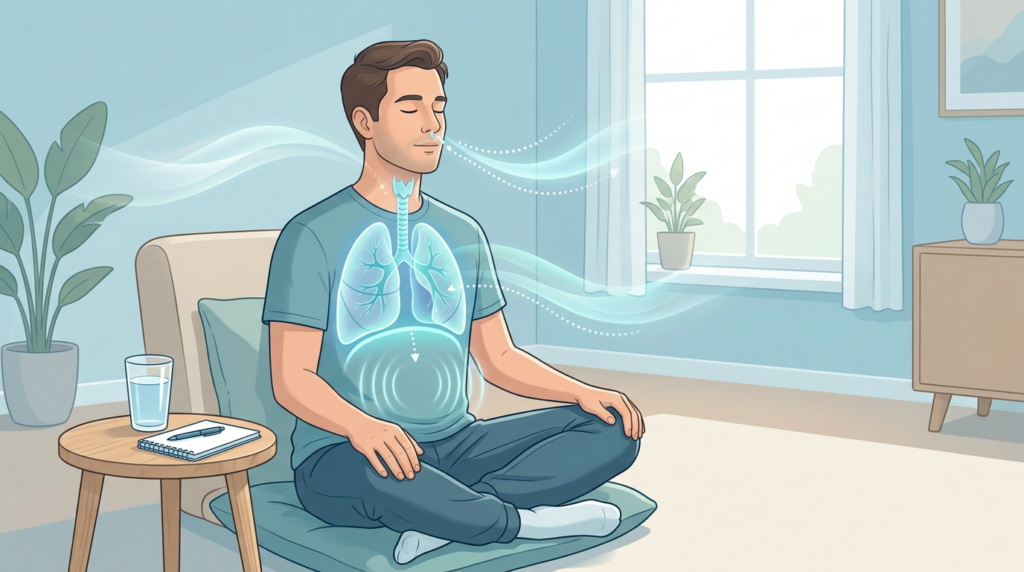
Often, yes, and this is the part people skip. When you are tense, your body heads for ejaculation faster. Slow breathing, relaxing your shoulders and jaw, and shifting attention from performance to sensation can all lower the intensity. If worry is the main driver, our article on performance anxiety covers the pattern in more detail. Talking to a counsellor can also help when stress, low mood or relationship strain is involved.
What About Condoms and Numbing Products?
Some men find that a condom, or two worn together, reduces sensation enough to help. Topical anaesthetics containing lidocaine or prilocaine are another option clinicians discuss, and you can read more about lidocaine sprays to see how they are described. A few cautions apply:
- Follow the label exactly and do not use more than directed.
- Some products can numb a partner if not used with a condom or wiped off.
- Stop if you notice rash, burning or swelling.
- Ask a pharmacist which product suits you, especially if you have allergies.
Where Do Prescription Medicines Fit?
If behavioural approaches are not enough, a doctor may discuss medicines. Antidepressants called SSRIs are sometimes prescribed off-label, because delayed orgasm is a known side effect. Dapoxetine, a short-acting SSRI made for on-demand use, is approved for PE in a number of countries, but as far as published information shows it has not been authorized by Health Canada or approved by the US FDA. Check the Health Canada Drug Product Database for current status rather than trusting a seller’s claims. For background, our piece on oral treatments looks at what tablets can and cannot do, and the dapoxetine product information explains what it contains.
Whatever the medicine, it should only be started after assessment. Never combine PE products with ED medicines, exceed labelled doses, or mix them with alcohol or recreational drugs. Products bought from unregulated sources may contain undeclared ingredients, which Health Canada has repeatedly warned about.
Could Another Health Issue Be Involved?
Sometimes. Thyroid problems, prostate inflammation, medicine changes and erection difficulties can all be linked with acquired PE. When ED is part of the story, it can also be an early marker of vascular problems, as explained in our article on ED and heart health. A short check-up can rule these in or out.
How Can Couples Make This Easier?
PE is rarely just one person’s problem. Agreeing on a signal to pause, widening intimacy beyond penetration, and treating practice as shared rather than a test all reduce pressure. The benefits of a healthy sex life include closeness and stress relief, which in turn help control.
When Should You See a Doctor?
- Quick ejaculation has lasted several months or distresses you or your partner.
- It started suddenly after years of normal control.
- You also have erection problems, pain, or urinary symptoms.
- Self-help techniques have not helped after a fair trial of a few weeks.
- You are considering any medicine or supplement.
In Canada, a family doctor, nurse practitioner or walk-in or virtual-care clinic is a sensible first stop, and a pharmacist can answer questions about topical products and interactions.
Frequently Asked Questions
Do premature ejaculation exercises really work?
Some men benefit, particularly when exercises are combined with relaxation and partner communication. The evidence is limited and varies in quality, so results differ from person to person.
How long should I practise before judging results?
Many programmes run for several weeks. If you see no change, a clinician can help you adjust the approach or look at other causes.
Are Kegel exercises safe?
They are generally low risk when done correctly. Overtightening or holding your breath can cause discomfort, so ask a pelvic health physiotherapist if you are unsure.
Can masturbating before sex help?
Some men find a second ejaculation takes longer, but evidence is limited and it is not a reliable strategy. It is better discussed with a clinician than relied upon.
Is it safe to take an ED pill to last longer?
ED medicines are prescription products authorized for erectile dysfunction, not for PE, and they need a clinician’s assessment because of interactions, especially with nitrates. Do not self-medicate.
This article is for general education and is not medical advice. Speak with a licensed doctor, nurse practitioner or pharmacist before starting, changing or combining any medicine, and confirm current product status with Health Canada or your local regulator.